

news about special resins
-
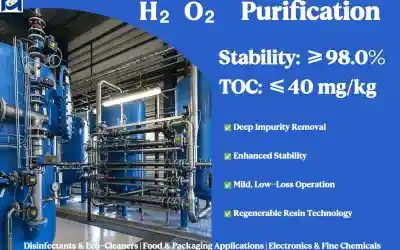
From Technical-Grade H₂O₂ to High-Purity, High-Stability Product: H₂O₂ Purification with Polymeric Resin
Hydrogen peroxide is one of the most widely used oxidants in the world — in disinfectants and eco-friendly cleaners, food and packaging processing, pulp and textile bleaching, electronics, and fine chemicals. What many producers and formulators discover, however, is that concentration alone does not determine product value. Purity and stability do. A 50% technical-grade H₂O₂ […]
-
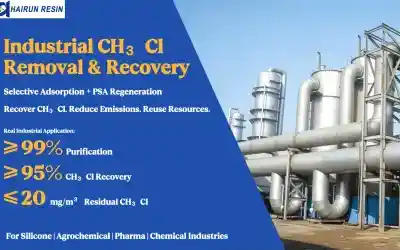
Resin-Based VOC Recovery: Turning Vent Gas into a Valuable Product
For chemical plants, VOC treatment is often seen as a compliance cost. But what if the most valuable component in your vent gas is the solvent itself? A new-energy chemical manufacturer in China, faced this challenge with methyl chloride (CH₃Cl), a valuable feedstock that continued to escape in vent gas even after compression-condensation recovery. Instead […]
-
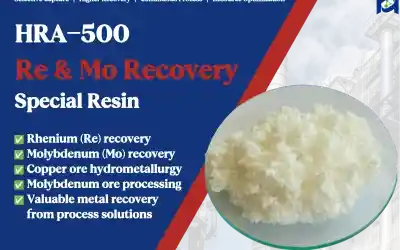
HRA-500 Mixed-Amine Chelating Resin — Selective Recovery of Rhenium & Molybdenum
HRA-500 is a macroporous mixed-amine anion exchange resin specifically designed for these applications. Built on a robust, crosslinked styrene-divinylbenzene (DVB) matrix with a carefully balanced combination of weak-base and strong-base amine groups, it selectively captures perrhenate and molybdate in strongly acidic, high-sulfate liquors, where conventional anion exchange resins can quickly become saturated by competing sulfate […]
-
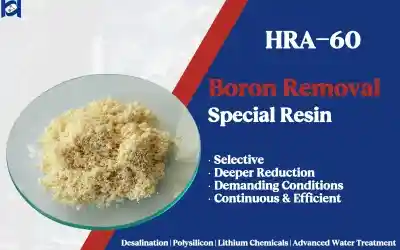
HRA-60 Boron-Selective Chelating Resin
Reliable, Selective Boron Control for Seawater Desalination, Polysilicon, Lithium Salts, and Process Solutions HRA-60 is a macroporous chelating resin built on a crosslinked styrene-divinylbenzene matrix and functionalized with N-methyl-D-glucamine (NMDG) groups. Its sugar-like polyol groups form a highly stable complex with boric acid and borate, removing boron selectively even in high-salinity backgrounds — from seawater […]
-
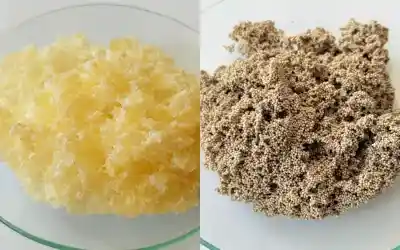
Total Nitrogen Removal: A Two-Resin Strategy for Ammonium and Organic Nitrogen
Total nitrogen is not a single pollutant. It includes different nitrogen species — especially ammonium nitrogen (NH₄⁺–N) and organic nitrogen — each requiring a different treatment mechanism. For polishing, water reuse, and challenging industrial wastewater, polymeric ion exchange resins can provide a reliable treatment step — when the resin is matched to the target nitrogen […]
-

Fluoride Removal from High-Salinity Water: Why Resin Selection Matters
Most fluoride-bearing wastewater contains much more than fluoride. Sulfate, chloride, nitrate, and bicarbonate can be present at concentrations far higher than fluoride itself. For conventional anion exchange resins, this creates three major challenges: Selectivity Matters More Than Capacity The solution is not simply adding more resin or regenerant. It is the resin chemistry. Resins with […]
-
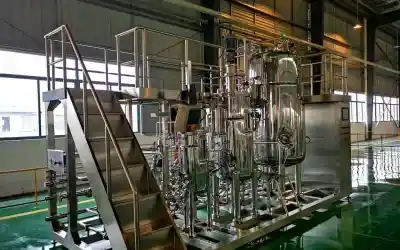
Polymer Resins for Sugar Refining and Purification: From Raw Syrups to High-Quality Products
Sugar refining is one of the most demanding purification challenges in the food and chemical processing industries. Whether producing refined cane sugar, beet sugar, functional sweeteners, or specialty oligosaccharides, manufacturers must remove color compounds, mineral ions, organic impurities, and off-flavors to meet strict quality standards. Traditional purification methods — bone char, activated carbon, chemical precipitation […]
-
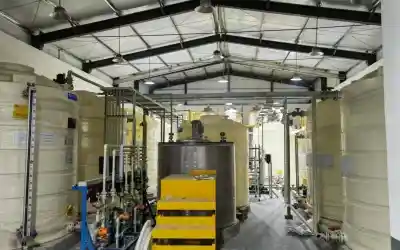
Industrial Water Softening: Why It Matters and How Ion Exchange Resins Deliver Reliable Solutions
Water hardness — caused by dissolved calcium and magnesium ions — is one of the most pervasive and costly problems in industrial operations. From boiler systems to cooling towers, from food processing to textile manufacturing, hard water creates scaling, reduces efficiency, increases energy consumption, and compromises product quality. Ion exchange water softening using specialized resins […]
-
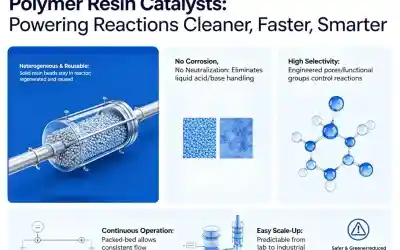
The Revolution in Industrial Catalysis: Why Polymer Resins Are Replacing Liquid Acids and Bases
In process chemistry, catalysts define everything — yield, selectivity, safety, waste, and profitability. For over a century, liquid acids like sulfuric acid, hydrofluoric acid, and aluminum chloride have been the workhorses of industrial catalysis. But a more efficient alternative has been gaining ground: solid polymer resin catalysts. This isn’t a niche technology anymore. It’s reshaping […]


