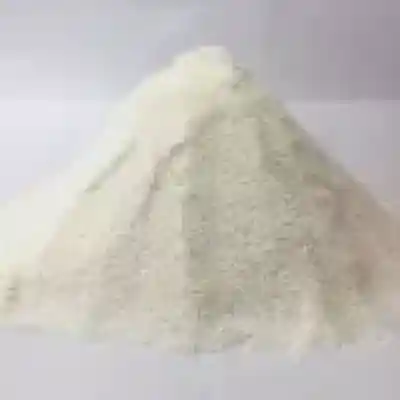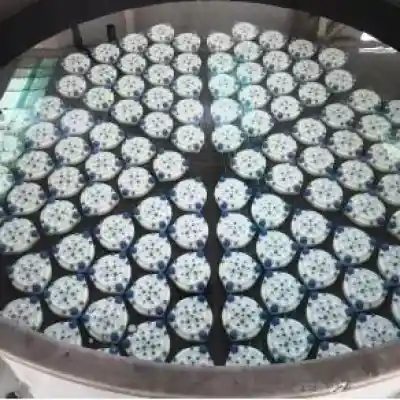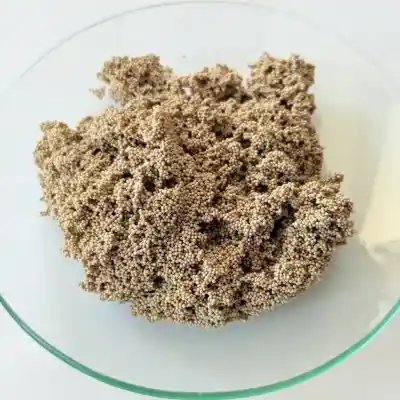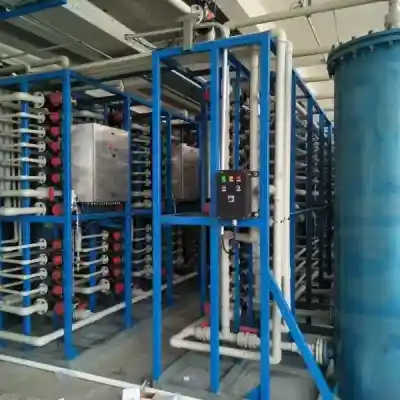

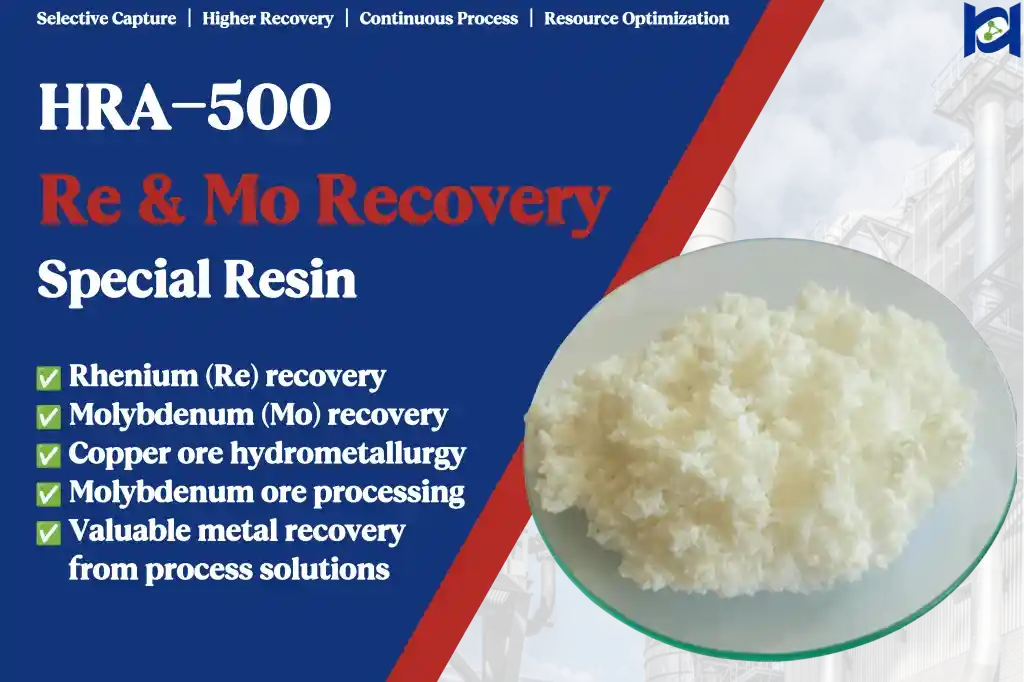
HRA-500 is a macroporous mixed-amine anion exchange resin specifically designed for these applications. Built on a robust, crosslinked styrene-divinylbenzene (DVB) matrix with a carefully balanced combination of weak-base and strong-base amine groups, it selectively captures perrhenate and molybdate in strongly acidic, high-sulfate liquors, where conventional anion exchange resins can quickly become saturated by competing sulfate and chloride ions.
Key Benefits
High Selectivity in Aggressive Media — Strong affinity for ReO₄⁻ and molybdate at pH 1–2, with minimal uptake of sulfate, chloride, copper, iron, and arsenic.
A Wider Operating Window — Its mixed weak-base/strong-base amine chemistry tolerates feed pH fluctuations that can impair the performance of single-functionality resins.
Concentrated Eluate for Simplified Downstream Processing — Ammonia elution produces a concentrated, high-purity metal-bearing solution suitable for downstream crystallization.
Long Service Life — The durable macroporous DVB structure withstands strongly acidic conditions and ammonia or caustic regeneration, supporting hundreds of operating cycles in properly pretreated systems.
Lower Operating Costs Compared with Solvent Extraction — No organic diluents are required, helping minimize VOC exposure, entrainment losses, and fire risks while simplifying automation in a fixed-bed configuration.
Industrial Applications
1. Rhenium Recovery from Copper Smelting Waste Acid
Copper concentrates contain small but valuable quantities of rhenium, which can follow molybdenite through the smelting process. During smelting and converting, rhenium reports to the off-gas cleaning circuit and ultimately enters the dirty acid or waste-acid scrubbing liquor. This highly aggressive stream typically has a pH of 1–2 and contains high concentrations of sulfate, copper, and arsenic, as well as suspended solids, while rhenium concentrations may be as low as 5–20 mg/L or even lower.
The resin preferentially captures ReO₄⁻ while limiting the uptake of competing sulfate and copper/arsenic species. This allows the treated acid to proceed to the plant’s existing waste-acid neutralization system without significantly altering its chemistry or disrupting downstream operations.
Ammonia elution produces a concentrated rhenium-bearing solution that can be processed to recover ammonium perrhenate.
2. Molybdenum and Rhenium Recovery from Molybdenum Ore Processing
In molybdenite roasting and subsequent acid- or alkali-leaching circuits, molybdenum may enter solution as molybdate or polymolybdate species, together with residual rhenium, copper, and iron.
HRA-500 can capture molybdate species from suitable acidic pregnant leach solutions. Its weak-base functionality helps limit copper and iron uptake under appropriate operating conditions, while its macroporous structure facilitates the adsorption of larger polymolybdate species.
The loaded resin bed can be eluted with aqueous ammonia or ammonium carbonate to produce an ammonium molybdate solution. Depending on the feed composition and downstream process design, this solution can be further processed into ammonium paramolybdate or molybdenum trioxide (MoO₃).
3. Related Applications
The same mixed-amine chemistry may also be suitable for the selective recovery of other metals that form oxoanions in acidic sulfate media, including tungsten, vanadium, and uranium in relevant metallurgical separation circuits. It can also be evaluated for polishing metallurgical effluents before discharge.
Disclaimer: Hairun Resin and its affiliates expressly disclaim all express or implied warranties (including, without limitation, warranties of timeliness, accuracy, completeness, reliability, or fitness for a particular purpose) with respect to the content of this document (including forward-looking statements). Neither Hairun Resin nor its affiliates shall be held liable for any consequences arising from errors, omissions, or other deficiencies in the document.