
Reliable, Selective Boron Control for Seawater Desalination, Polysilicon, Lithium Salts, and Process Solutions
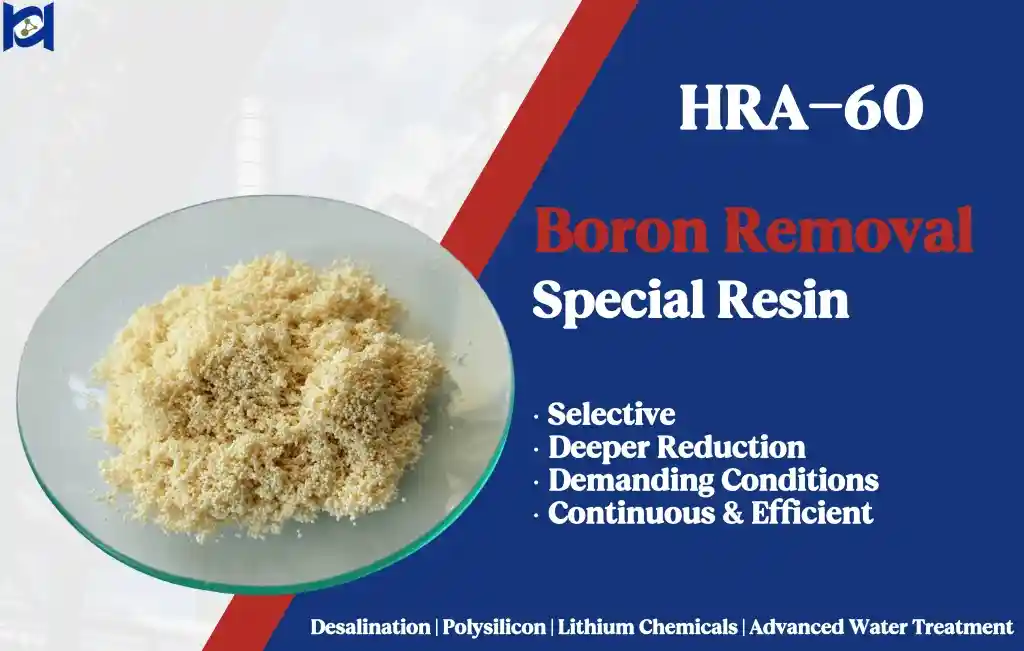
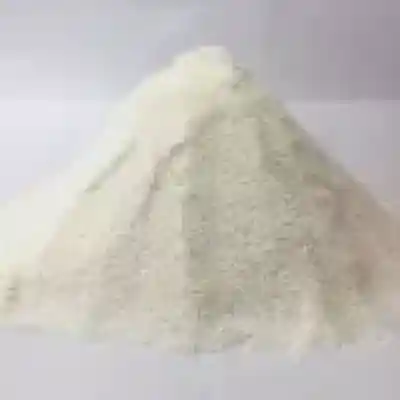
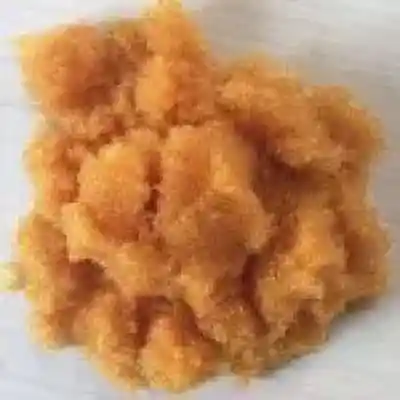
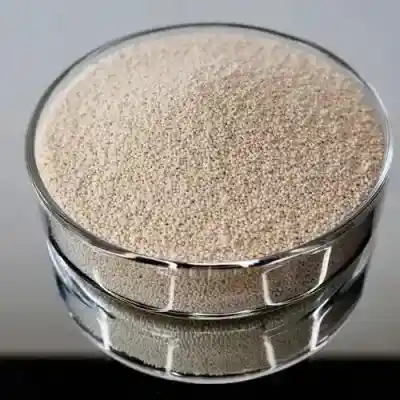
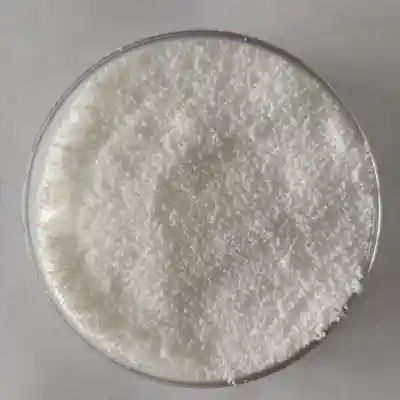
HRA-60 is a macroporous chelating resin built on a crosslinked styrene-divinylbenzene matrix and functionalized with N-methyl-D-glucamine (NMDG) groups. Its sugar-like polyol groups form a highly stable complex with boric acid and borate, removing boron selectively even in high-salinity backgrounds — from seawater and brines to ultrapure process water and valuable salt solutions.
Exceptional selectivity — targets boron while leaving other dissolved ions virtually untouched
Deep removal — capable of reducing boron to below 0.5 mg/L (ppm) in polishing applications
Salt-tolerant performance — works directly in seawater, RO permeate, and concentrated brines
Regenerable & economical — long service life, low chemical consumption, minimal waste sludge
Robust macroporous structure — fast kinetics, good osmotic and mechanical stability
Easy integration — drop-in replacement for standard NMDG-type boron resins
Industrial Applications
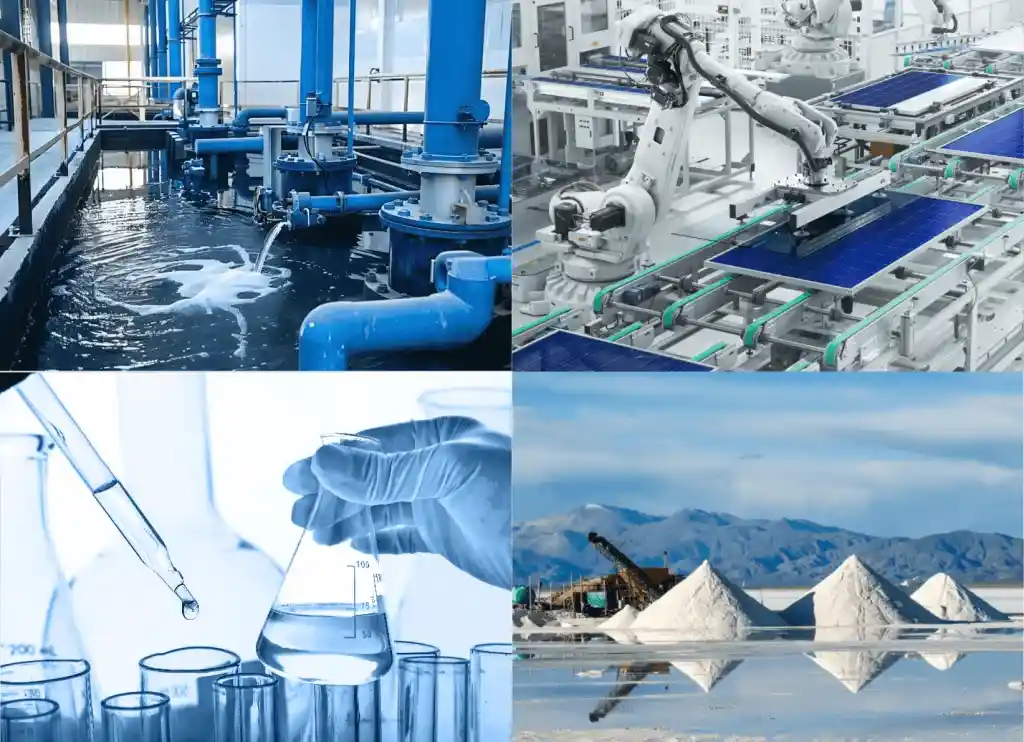
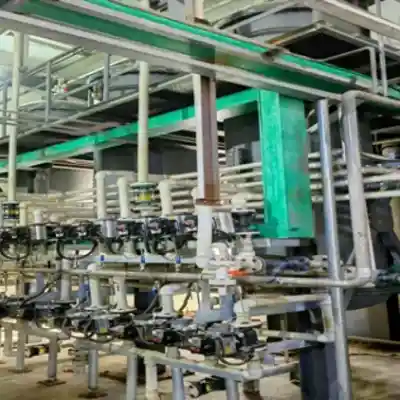
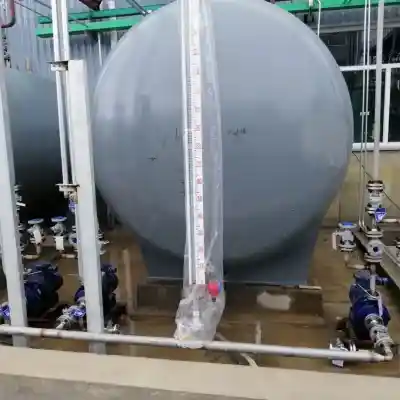
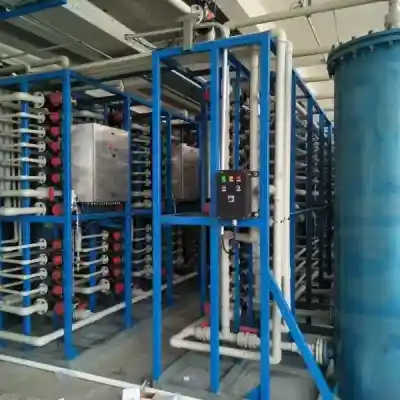
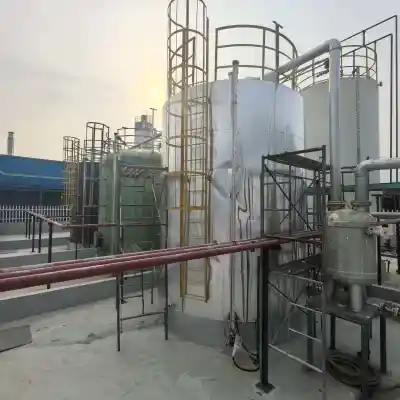
1. Seawater Desalination — Boron Polishing
Seawater typically contains 4–7 mg/L of boron, which passes through standard reverse osmosis membranes more easily than salts. Meeting drinking-water and irrigation limits (often 0.5–1.0 mg/L) frequently requires a dedicated polishing stage.
Installed as a post-RO boron-polishing unit, HRA-60 reduces residual boron to compliant levels without rejecting the salts already balanced in the permeate. Its selectivity means long service cycles between regenerations and predictable operating costs in large municipal and industrial desalination plants.
2. Feed Solution & Process Liquid Purification
In many chemical and metallurgical processes, boron impurities in feed liquids downgrade final product quality — even when the valuable component itself is present at high concentration. HRA-60 removes boric acid from process streams while leaving the target chemistry intact.
Typical uses include purification of magnesium chloride/magnesium brines (e.g., reducing boron from ~100 ppm to below 10 ppm in concentrated MgCl₂ solutions), chemical synthesis feed liquors, irrigation water, and industrial process water. Because capture is not disrupted by background salts, the resin suits both high-solids brines and dilute aqueous solutions.
3. Polysilicon, Semiconductor & Ultrapure Water
Solar-grade and electronic-grade polysilicon production demands extremely tight impurity control; trace boron acts as a dopant and directly degrades semiconductor and photovoltaic material performance.
HRA-60 is used in ultrapure water (UPW) preparation and process-stream polishing for polysilicon and electronics manufacturing, consistently achieving sub-ppm boron levels. Proper pretreatment (fine filtration and organic-fouling control) protects the bed and supports stable, long-cycle performance in these high-purity environments.
4. Lithium Salt Solution Purification
Boron is a common companion impurity in lithium resources — both hard-rock spodumene leachate and salt-lake brines — and carries through into lithium carbonate, lithium hydroxide, and battery-grade lithium products. Residual boron can prevent producers from meeting battery-grade specifications.
HRA-60 selectively removes boron from lithium chloride and lithium sulfate solutions without significant lithium loss, even against high ionic backgrounds. It integrates smoothly into lithium extraction flowsheets after primary impurity removal, helping producers protect yield and meet stringent battery-material quality requirements.
As a specialized supplier of polymeric adsorption and chelating resins, we support international customers with application engineering, resin selection, and system sizing — not just product delivery.
Share your flow rate, boron concentration, pH, background salts, and target outlet limit, and our engineers will recommend the right HRA-60 charge, vessel configuration, and regeneration scheme for your application.