
In hydrometallurgy, steel galvanizing, chemical manufacturing, and secondary metal recycling, the co-presence of zinc and iron in waste acid streams is a persistent challenge. Separating these two metals efficiently — especially under extreme acidity and ultra-high organic load — has long been considered one of the more intractable problems in industrial water treatment.
Zinc-iron separation is difficult for fundamental chemical reasons:
1. Similar ionic behavior. Zn²⁺ and Fe²⁺ have comparable ionic radii and charge densities. In acidic chloride media, both form stable chloro-complexes (ZnCl₃⁻, ZnCl₄²⁻, FeCl₄²⁻), making selective extraction inherently challenging.
2. Extreme operating environment. Industrial waste acids routinely present:
Total dissolved metals >100 g/L
Free acid concentrations of 3–20%
3. Conventional methods are inadequate for this combination of challenges:
| Approach | Core Limitation |
|---|---|
| Chemical precipitation | Non-selective; massive hazardous sludge; significant zinc loss through co-precipitation |
| Solvent extraction | Organic losses, fire risk, emulsion formation at high salinity; complex phase management |
| Thermal hydrolysis | Energy-intensive (>800°C); zinc recovery limited below 0.5 g/L feed |
| Membrane processes | Fouling at high salinity; largely laboratory-scale; co-permeation of metals |
The result is a persistent gap: a need for a separation technology that remains selective, stable, and economical under conditions that overwhelm conventional approaches.
Project: Continuous Ion Exchange for Zinc-Iron Separation
A pilot-scale project was commissioned to validate continuous ion exchange technology for separating iron and zinc from waste acid generated by a chemical manufacturing facility producing aromatic nitro compounds.
Feed characteristics:
| Parameter | Value |
|---|---|
| Fe content | 7.33% |
| Zn content | 44,000 mg/L |
| Acidity | 3.71% |
| Estimated COD | ~200,000 mg/L |
This is an extremely challenging feed — the combination of high metal loading andstrong acidity would defeat most conventional treatment approaches.
Process Design
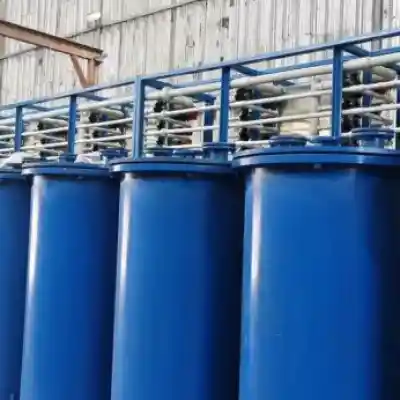
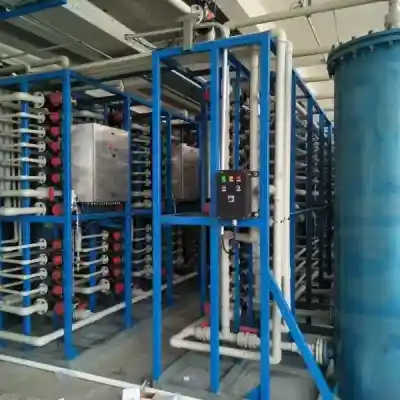
The system used a continuous counter-current ion exchange configuration with three functional zones:
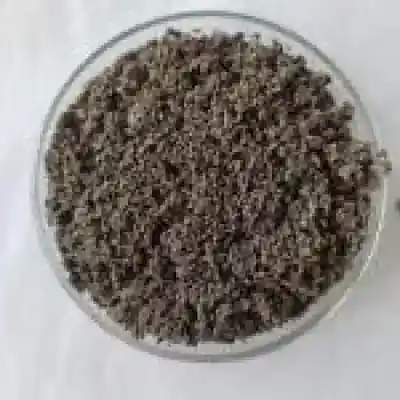
Adsorption Zone: Waste acid passed through specialized macroporous resin that selectively adsorbs zinc while allowing iron to pass through.
Acid Wash Zone: Saturated resin was eluted with dilute acid, achieving differential stripping that separated iron from zinc based on their distinct elution profiles.
Water Wash Zone: Residual zinc was recovered using water, producing a high-purity zinc solution.
After optimization across multiple test cycles, the system achieved stable and reproducible performance:
Adsorption zone:
Feed flow: 7.5 L/h | Throughput: 180 L
Outlet Fe: 6.79% | Outlet Zn: <150 mg/L (average 144 mg/L)
Fe separation efficiency: 95%
Zn adsorption rate: 99%
Acid wash zone:
Daily eluate: 96 L
Fe: 5.44% | Zn: 38,137 mg/L (87× concentration from feed)
Partial recycle to feed; 10–20% routed for further processing
Water wash zone:
Daily zinc solution: 144 L
Zn: 26,000 mg/L | Fe: <0.05%
Zn separation efficiency: >50%
Product stream suitable for direct electrowinning
Key Takeaways
Near-complete zinc capture. 99% zinc adsorption in the adsorption zone, with outlet concentrations consistently below 150 mg/L against a target of <1,000 mg/L.
High-purity product streams. Both the acid wash eluate (38,137 mg/L Zn) and water wash stream (26,000 mg/L Zn) produced zinc at concentrations suitable for direct recovery, while iron was concentrated to 5–7% for separate utilization.
Scalable and continuous. Multi-cycle testing confirmed long-term stability. The counter-current configuration eliminates batch variability and supports straightforward scale-up to industrial throughput.
Implications for Process Industries
This project demonstrates that ion exchange-based zinc-iron separation is not just a laboratory concept — it is a deployable, scalable technology for some of the most challenging waste streams in process industries.
For operations generating zinc-iron waste acids, the implications are clear:
Waste treatment costs can be converted into metal recovery revenue
Acid can be regenerated and recycled, reducing raw material costs
Regulatory compliance becomes achievable even at extreme contaminant levels
The technology integrates into existing process flows without fundamental redesign
Hairun Resin specializes in high-difficulty industrial separation challenges. We provide end-to-end solutions — from resin selection and pilot testing to full system design, integration, and ongoing technical support.
Disclaimer: Hairun Resin and its affiliates expressly disclaim all express or implied warranties (including, without limitation, warranties of timeliness, accuracy, completeness, reliability, or fitness for a particular purpose) with respect to the content of this document (including forward-looking statements). Neither Hairun Resin nor its affiliates shall be held liable for any consequences arising from errors, omissions, or other deficiencies in the document.