
In 2025, the global VOC recovery and abatement market was valued at USD 17.54 billion — and is projected to surge to USD 151.97 billion by 2035, at a CAGR of 24.1%. This isn’t just growth, it’s a structural transformation of how industries approach waste gas.
Industrial exhaust streams contain a complex mix of volatile organic compounds — solvents, aromatics, halogenated hydrocarbons, alcohols, esters — each with distinct physical properties, toxicity profiles, and recovery values.
Resin Adsorption: Engineered Selectivity for Demanding Waste Gas Streams
Macroporous adsorption resins are synthetically engineered styrene-divinylbenzene (St-DVB) polymer beads with a three-dimensional crosslinked network. Unlike natural adsorbents, their pore structure is precisely tunable during synthesis — allowing engineers to design resins optimized for specific VOC molecules.
Why resins outperform traditional alternatives in toluene/n-hexane treatment:
Hydrophobic by nature: The St-DVB backbone is inherently water-repellent. Resins maintain full adsorption capacity even in humid or wet gas streams — eliminating the need for energy-intensive pre-drying.
No metal impurities: Synthetically produced resins contain no catalytic metal residues. This eliminates the risk of catalytic polymerization or spontaneous combustion during adsorption — a genuine safety concern with activated carbon processing reactive solvents.
Removal rate >99% : For non-polar and weakly polar VOCs including toluene and n-hexane, resin adsorption achieves removal efficiencies exceeding 99%, compared to 90–92% for conventional activated carbon.
Service life 3–5 years: Resins withstand hunders of adsorption-desorption cycles with minimal performance degradation.
Lower regeneration energy: Steam consumption for desorption is approximately half that required for activated carbon regeneration — reducing both operating costs and carbon footprint.
Clean desorption: The recovered solvent stream is clear and free of black particulate contamination — critical when recovered solvents are re-used in production processes.
Real Project: Recovering Toluene & n-Hexane from a Biochemical Plant’s Exhaust Stream
To illustrate how these principles translate into practice, let me walk you through a recent industrial project.
A large-scale biochemical manufacturing facility faced a critical challenge: its production processes generated exhaust gas containing toluene, n-hexane, and dimethylamine at high and fluctuating concentrations.
The facility needed a treatment system that could:
Handle gas volumes of approximately 1,000 m³/h
Accommodate inlet VOC concentrations averaging 20,000 mg/m³ with peaks up to 68,000 mg/m³
Achieve outlet concentrations below 500 mg/m³
Recover the solvents in reusable form
Operate safely with explosive-risk gas mixtures
Run continuously with minimal manual intervention
The Engineering Solution
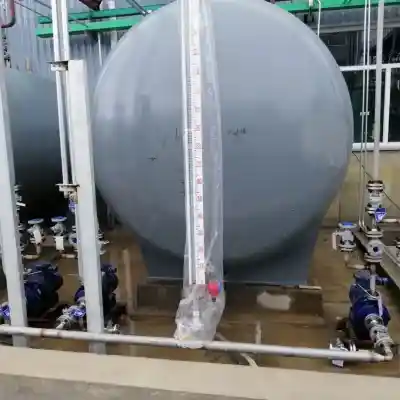
A complete resin adsorption system was designed, manufactured, and commissioned — built around a pre-condensation + resin adsorption + steam desorption + condensation recovery process flow:
Step 1 — Pre-condensation: The mixed exhaust first passes through a booster fan and enters a shell-and-tube condenser, where the highest-concentration VOC fraction is partially condensed and separated as liquid.
Step 2 — Gas-liquid separation: The pre-cooled gas passes through a separator, removing any remaining liquid droplets before entering the adsorption stage.
Step 3 — Resin adsorption: The gas enters the adsorption tower system — two towers operating in a duty-standby configuration (one adsorbing, one available). The towers are packed with specialized macroporous adsorption resin featuring a surface area exceeding 1,200 m²/g and an optimized pore structure for aromatic and aliphatic hydrocarbon capture. The resin’s hydrophobic character ensures consistent performance regardless of gas humidity.
Step 4 — Steam desorption & recovery: When the resin reaches saturation, low-pressure steam is introduced counter-currently to strip the adsorbed VOCs from the resin bed. The resulting concentrated organic vapor passes through a two-stage condensation system, where toluene and n-hexane are recovered as a liquid phase in a collection tank — ready for reuse or resale.
Step 5 — Cooling & drying: After desorption, the tower is cooled with ambient air back to adsorption-ready temperature (≤40°C) before returning to service, ensuring continuous cyclic operation.
Automation & Operational Efficiency
The complete system is controlled by a PLC-based automation system with an upper-level HMI, providing:
One-touch parameter adjustment for airflow, temperature, and cycle timing
Real-time data transmission to the plant’s central control room
Automatic alarm management and fault diagnostics
Results
VOC removal rate consistently >99% , meeting all emission requirements
Recovered toluene/n-hexane mixture suitable for direct reuse in production
Resin service life rated at 3–5 years with <10% annual replenishment
System designed for future capacity expansion with oversized piping and modular architecture
Zero solid waste generated during equipment lifetime — spent resin is regenerated on-site, not discarded
The Strategic Shift: From “End-of-Pipe” to “Resource Recovery”
This project exemplifies a broader industry transformation. The old paradigm — capture VOCs, destroy them, pay for disposal — is being replaced by a new model: capture VOCs, recover solvents, generate revenue.
The VOC treatment industry has entered a new era defined by three converging forces: regulatory enforcement, economic incentives, and technology advancement. Companies that treat waste gas as a resource — not a liability — will gain competitive advantages in cost, compliance, and sustainability.
Disclaimer: Hairun Resin and its affiliates expressly disclaim all express or implied warranties (including, without limitation, warranties of timeliness, accuracy, completeness, reliability, or fitness for a particular purpose) with respect to the content of this document (including forward-looking statements). Neither Hairun Resin nor its affiliates shall be held liable for any consequences arising from errors, omissions, or other deficiencies in the document.