
Ammonia nitrogen remains one of the most persistent challenges in industrial wastewater management. Globally, ammonia production exceeds 190 million tonnes annually — and approximately 30% of this nitrogen ultimately enters wastewater systems as ammoniacal nitrogen.
The regulatory landscape is accelerating the shift toward advanced ammonia treatment:
EU Directive 2026/805 has revised water quality standards with stricter pollutant limits and automated monitoring requirements
US EPA maintains ammonia limits of 1-3 mg/L in NPDES permits, with seasonal tightening for sensitive waterways
China’s revised Water Pollution Prevention Law continues to lower discharge thresholds for nitrogen compounds
Netherlands approved a €715 million program specifically targeting ammonia emission reduction
For industries generating ammonia nitrogen wastewater, the message is clear: compliance is non-negotiable, and the technology exists to achieve it while recovering value from what was previously waste.
The industrial toolbox for ammonia nitrogen removal is well-established, yet each method carries significant trade-offs:
Biological nitrification/denitrification converts ammonium to nitrate and then to nitrogen gas. While effective at moderate concentrations, it struggles with high or fluctuating loads, requires large footprint, is sensitive to temperature and toxic shock, and cannot recover the nitrogen value.
Air/steam stripping raises pH and blows off ammonia as gas. Energy-intensive, especially for low-concentration streams. Creates secondary air pollution requiring acid scrubbing. Efficiency drops sharply below 100 mg/L.
Breakpoint chlorination oxidizes ammonia to nitrogen gas using chlorine. Expensive at scale (9-10 mg chlorine per mg ammonia). Generates chlorinated byproducts. Not suitable for large volumes.
Membrane processes (reverse osmosis, membrane distillation, gas-permeable contactors) can concentrate ammonia but face fouling, high energy costs, and complex chemical requirements.
Ion exchange with specialized resins — the approach gaining the most traction for mid-to-low concentration ammonia streams — offers a fundamentally different value proposition: selective capture, concentration, and potential recovery of ammonia from large volumes of dilute wastewater.
Why Ion Exchange Resin Stands Out
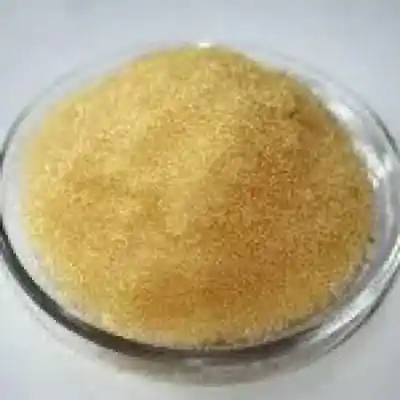
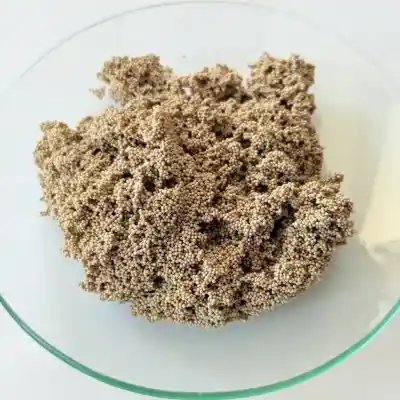
The ion exchange approach works on a deceptively simple principle: cation exchange resin selectively captures ammonium ions (NH4⁺) from wastewater, concentrating them on the resin surface. Once saturated, the resin is regenerated using a mild acid solution, releasing the captured ammonium as a concentrated ammonium salt solution.
what it achieves:
Volume reduction. A wastewater stream with 50 mg/L ammonia flowing at hundreds of tonnes per day can be reduced to a small concentrated regenerant stream — typically less than 5% of the original volume. This dramatically cuts downstream treatment costs.
Selective capture. Unlike biological or physical methods, ion exchange resins offer high selectivity for ammonium even in the presence of competing ions, achieving consistent outlet concentrations well below 5 mg/L.
Regenerability. The resin can be cycled with minimal performance degradation. Modern specialty resins maintain >95% exchange capacity after extended service.
Low operating cost. No thermal energy input, no large chemical consumption, no aeration — just water for rinsing and mild acid for regeneration.
Recovery potential. The concentrated ammonium salt regenerant can be processed into fertilizer, converted back to ammonia, or used in other applications — turning waste into a product.
When a chemical plant discharges wastewater containing 50 mg/L ammonia nitrogen, it is literally flushing away raw material value. The ion exchange resin doesn’t just remove the contaminant — it captures, concentrates, and makes that ammonia available for recovery.
Consider the economics:
Global ammonia market valued at over $85 billion
Synthetic fertilizer demand continues growing with population
Industrial buyers pay premium prices for ammonium sulfate and other nitrogen compounds
Recovered ammonium salts can be sold or reused in production
The resin essentially acts as a “molecular sponge” — absorbing dilute ammonia from thousands of cubic meters of wastewater, then releasing it in a small, manageable, high-value concentrate.
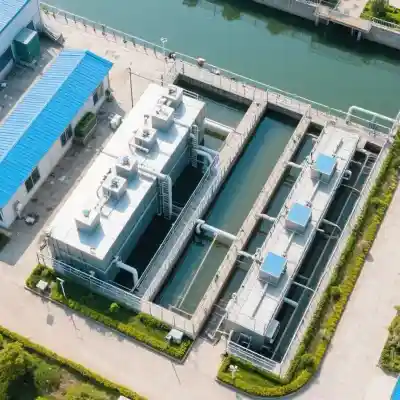
Real Case: Chemical Industry Ammonia Nitrogen Removal
A major chemical manufacturing facility was generating ammonia nitrogen wastewater after an evaporation process step. The stream characteristics:
Wastewater flow: hundreds of tonnes per day, continuous operation
Inlet ammonia nitrogen: moderate concentration range
Target outlet: ammonia nitrogen below 2 mg/L
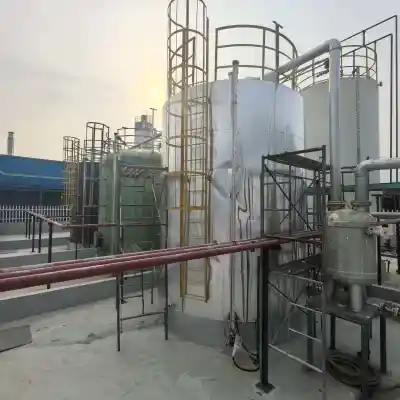
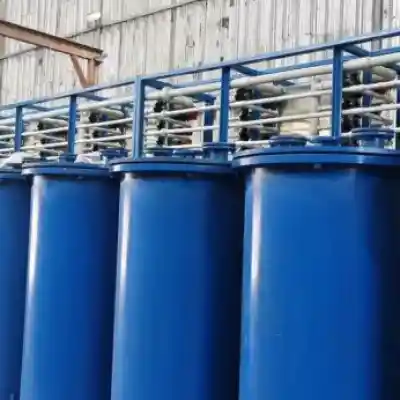
The engineering solution deployed a three-column ion exchange system — two columns operating in series while the third undergoes regeneration. This staggered configuration ensures uninterrupted treatment with zero production downtime.
✅ Consistent outlet ammonia nitrogen below 2 mg/L — exceeding discharge requirements
✅ Ultra-low operating cost — under $0.50 per cubic meter of wastewater treated
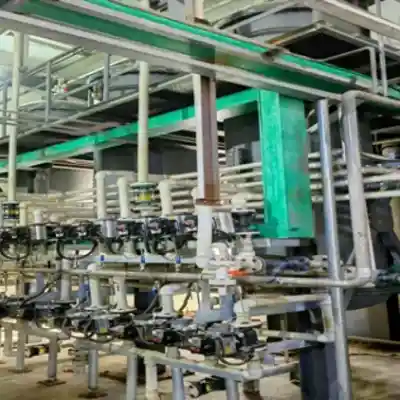
✅ Fully automated PLC-controlled operation — minimal operator attention required
✅ 36-hour adsorption cycle followed by 12-hour regeneration — efficient batch operation
✅ Volume reduction achieved — dilute ammonia concentrated into a small regenerate stream
✅ Resin service life validated over extended operation with stable performance
✅ Concentrated ammonium sulfate regenerate available for recovery or reuse
The system demonstrates that effective ammonia nitrogen removal doesn’t require expensive aeration, massive chemical consumption, or large biological infrastructure. A compact, automated ion exchange system can achieve deep ammonia removal at a fraction of the cost of conventional approaches.
The next frontier in industrial wastewater treatment isn’t just about meeting discharge standards — it’s about recognizing that every waste stream contains recoverable resources. Ammonia nitrogen in wastewater is a perfect example: harmful at the point of discharge, valuable at the point of recovery.
Ion exchange resin technology provides the bridge — capturing dilute contaminants from massive volumes, concentrating them, and making recovery economically viable. The question for forward-thinking operations is not whether to adopt this approach, but how quickly they can deploy it.
If your facility is dealing with ammonia nitrogen wastewater challenges, let’s explore how resin-based solutions can transform your compliance cost into a recovery opportunity.
📧 support@hrresin.com
📱 WhatsApp: +86 158 2145 4698
🌐 www.hrresin.com
#AmmoniaNitrogen #WastewaterTreatment #IonExchange #ResinTechnology #IndustrialWastewater #WaterTreatment #NitrogenRecovery #ChemicalIndustry
Disclaimer: Hairun Resin and its affiliates expressly disclaim all express or implied warranties (including, without limitation, warranties of timeliness, accuracy, completeness, reliability, or fitness for a particular purpose) with respect to the content of this document (including forward-looking statements). Neither Hairun Resin nor its affiliates shall be held liable for any consequences arising from errors, omissions, or other deficiencies in the document.